Loading...
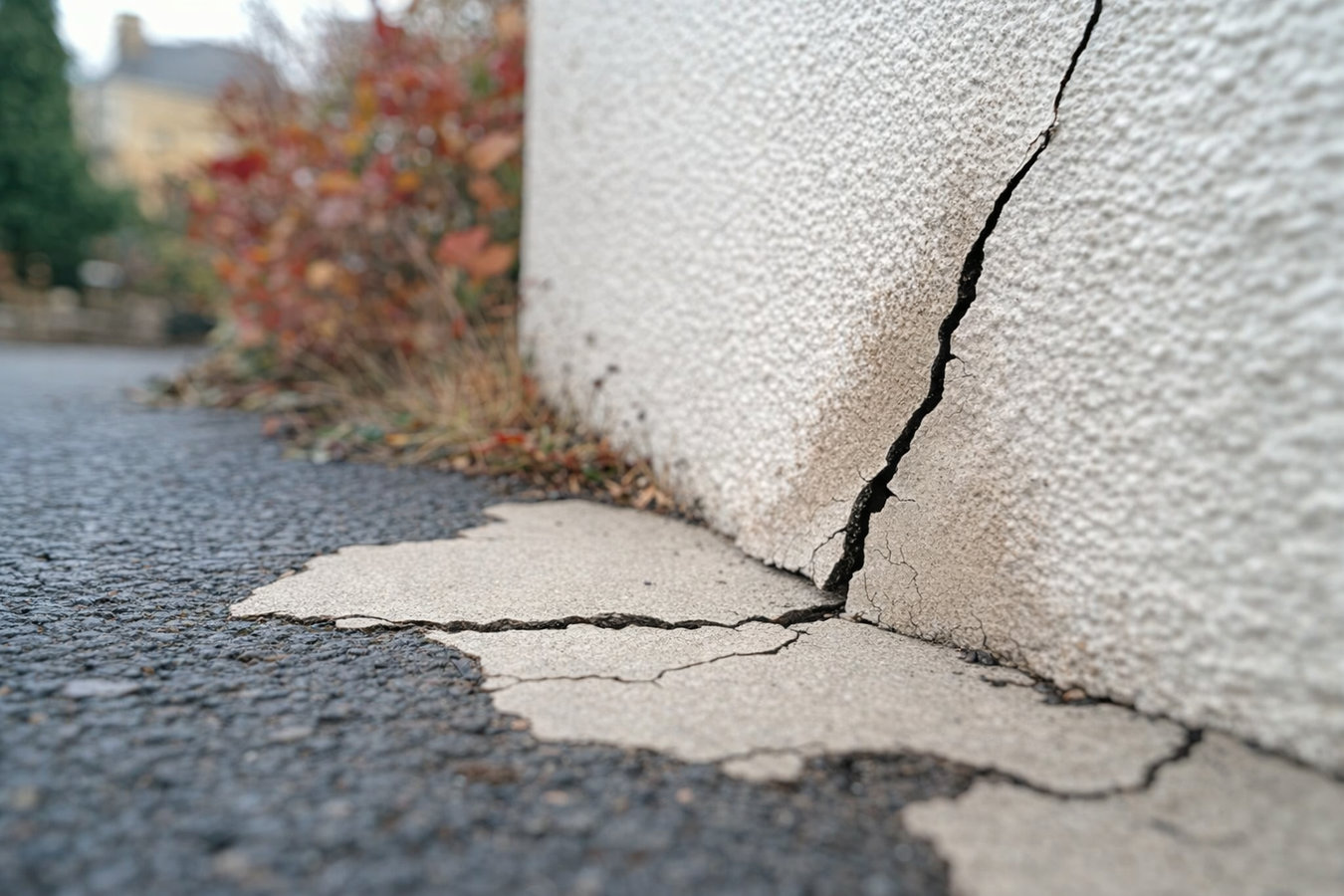
Sunken slabs, uneven driveways, and sticking doors are fixable without a full tearout. We lift and level concrete foundations in Gardena using mudjacking or foam injection - most jobs are done the same day.
Foundation raising in Gardena lifts sunken concrete slabs back to their original level by pumping material through small drilled holes beneath the slab - most residential jobs are completed in two to eight hours with no excavation required.
When soil shifts, compresses, or erodes underneath a concrete slab, the slab drops with it. In Gardena, that process is driven largely by the clay-heavy soils common throughout the South Bay. Clay expands when it absorbs winter rain and shrinks during the long dry summers - and that repeated cycle creates voids under the slab over time. Once a void forms, the concrete has nothing to rest on and begins to settle. Foundation raising fills those voids and lifts the slab back up, and it can be the right answer for a range of situations from a sunken driveway panel to an uneven interior floor.
If your slab has already cracked severely or the soil conditions are beyond what a raise can address, it may be time to look at slab foundation building as a replacement path rather than a repair.
If a door that used to swing freely now drags on the floor, or a window feels jammed in its frame, the frame around it may have shifted. In Gardena's older slab-on-grade homes, this is often the first sign that concrete beneath part of the house has dropped. If it happens to multiple doors or windows at once, the foundation is worth checking.
Cracks running at a 45-degree angle from corners of doors or windows - especially in drywall or stucco - are a classic sign that part of the structure has shifted. Gardena's clay soils move with the seasons, and these cracks often appear after a wet winter followed by a dry summer. A crack that grows over time is more concerning than one that has stayed the same size for years.
If you can see a clear step-down between two concrete slabs that used to be flush, or if water pools in a low spot that did not used to collect water, the slab has likely settled. This is very common in Gardena homes built in the postwar era, where original soil compaction under the slab was not always done to modern standards. A tripping hazard like this is also a liability risk.
If you notice a gap opening up between your interior floor slab and the base of a wall, or between an exterior step and the house, the slab is moving away from the structure. This is a sign that the soil underneath has shifted enough to pull the concrete out of its original position. In Gardena, this often happens near the edges of a slab where soil erosion from irrigation or rain runoff is most active.
We offer both mudjacking and polyurethane foam injection for residential foundation raising projects across Gardena and the surrounding South Bay. The method that fits your home depends on the size of the area, how much the slab has dropped, what the soil conditions look like, and your timeline. Mudjacking is a time-proven approach that uses a cement-and-soil slurry pumped under the slab - it is typically less expensive and works well for larger outdoor areas like driveways and patios. Foam injection uses a lightweight expanding material that cures faster and puts less weight on already-soft soil.
In cases where drainage is contributing to the sinking - which is common on Gardena's flat lots - we can pair the raising work with surface grading or drainage corrections to reduce the chance of the problem returning. For slabs that have settled beyond what a raise can correct, we also handle concrete cutting to remove the damaged section cleanly before a new pour is made.
Best for homeowners on a tighter budget who need a proven, long-established method for lifting larger outdoor slabs like driveways and patios.
Best for homeowners who need a faster cure time, lighter material weight on soft soils, or a minimally invasive lift on finished interior floors.
For homeowners whose slab sank due to water erosion - we pair the lift with drainage corrections to prevent the same problem from returning.
Gardena sits on clay-heavy soils that are common throughout the South Bay area of Los Angeles County. Clay soil swells when it gets wet and shrinks when it dries out - and that repeated movement is one of the most common reasons concrete slabs sink or crack here. Combine that with a housing stock where many homes were built in the 1950s and 1960s, when soil compaction under slabs was not always done to the standards we use today, and foundation settling becomes a predictable issue rather than a rare one. Catching it early with a raise is almost always less expensive than waiting until the damage is more severe.
Gardena also gets most of its rain between November and March, followed by a long dry summer - and that wet-dry cycle drives the soil movement that causes slabs to sink. Homeowners across the city from the neighborhoods near Torrance to the streets near Hawthorne deal with the same soil and climate conditions, and we bring that local context to every assessment. The best window to schedule a raise is typically late spring or early fall - after the wet season has settled the soil and before the summer rush fills contractor schedules.
Tell us where the sinking is, how long it has been happening, and whether you have noticed any cracks or sticking doors. You do not need to know the technical details - just describe what you see. We reply within 1 business day to schedule your free on-site estimate.
We walk the affected area, measure how much the slab has dropped, and assess the underlying soil conditions. You receive a written estimate covering the method, number of drill holes, material, permit fees if required, and the total cost before any work is scheduled.
On the work day, small holes are drilled through the concrete at measured intervals. The lifting material is pumped through those holes until the slab returns to the correct level. Most residential jobs are finished in a few hours - the work is noisy but contained to the slab area.
Once the slab is level, the drill holes are patched flush with a concrete mix. For foam injection you can walk on the surface within an hour or two; for mudjacking, typically within 24 hours. We walk you through the finished work and point out any drainage improvements worth considering.
Free on-site estimate, written quote before any work begins, and no obligation to book. We reply within 1 business day.
(424) 414-1156We carry a California C-8 Concrete Contractor license and full liability insurance on every foundation raising project. You can verify our license number on the California Contractors State License Board website at cslb.ca.gov before you sign anything.
Gardena sits on clay-heavy soils that expand and contract every wet and dry season - and that movement is the most common reason slabs sink here. We factor your specific soil type into every repair recommendation, not just the visible symptoms of the slab.
A large share of Gardena's homes were built between the 1940s and 1960s under soil compaction standards that fall short of what we know today. We know what to look for on older slabs and give you an honest assessment of whether raising will hold long-term or whether a different solution fits better.
Foundation raising does not require excavation or heavy equipment rolling across your yard. The drill holes are small, the crew is typically done within a few hours, and your slab is usable again the same day or the next morning. No week-long disruption to your property.
Our foundation raising work in Gardena is grounded in the same local knowledge that makes any repair hold up - an understanding of the soil, the housing stock, and the seasonal patterns that cause the problem in the first place. We also follow the standards set by the Concrete Foundations Association and pull permits through the Los Angeles County Department of Public Works when the scope requires it, keeping your project on record and your home protected.
When a slab is too damaged to raise, precise cutting and removal of the failing panel is often the right first step before a new pour.
Learn moreIf the slab has settled beyond repair, full slab replacement builds a properly compacted, reinforced foundation from the ground up.
Learn moreSpring booking slots fill fast in the South Bay. Call now or submit a quick estimate request and we will get back to you within 1 business day.