Loading...
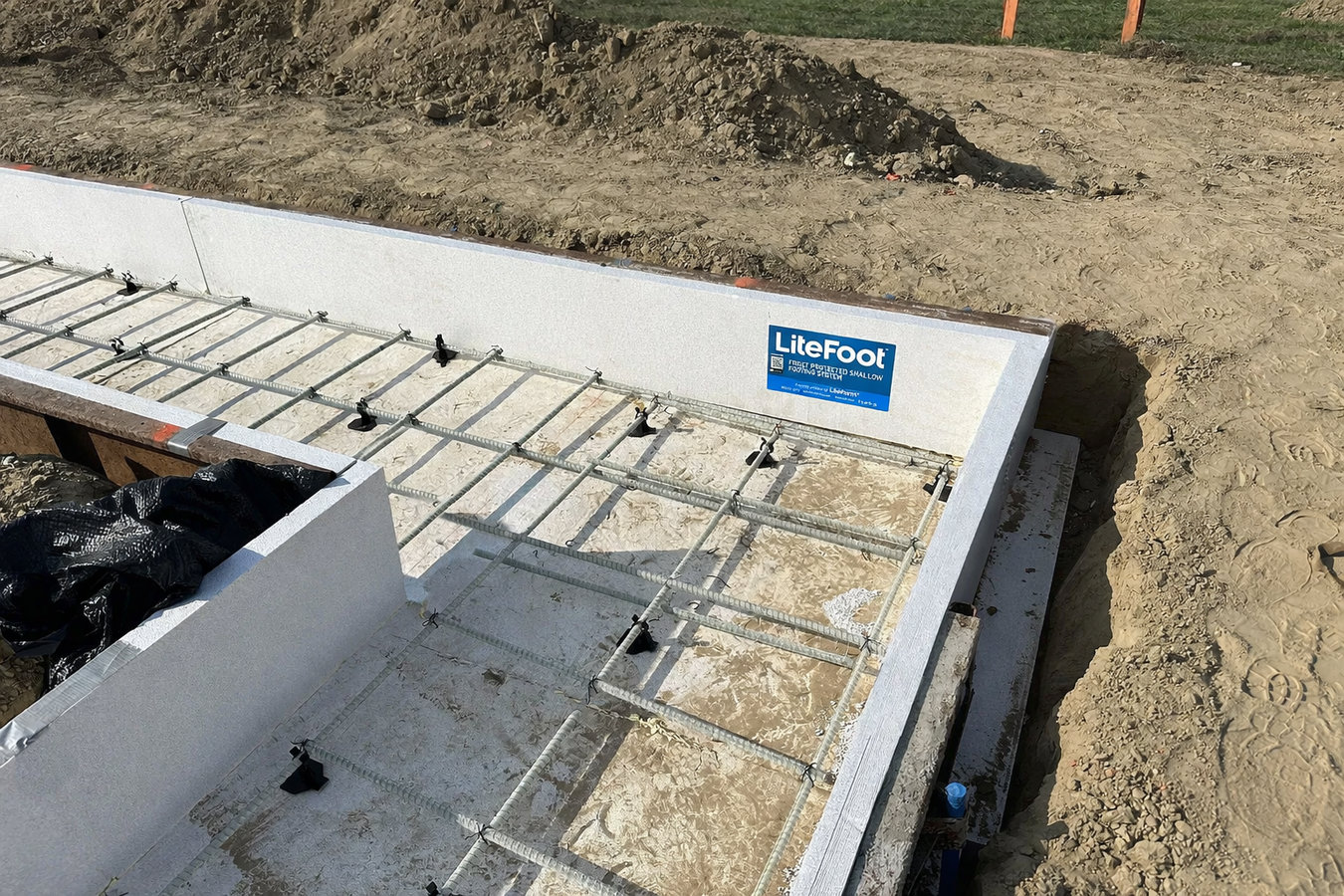
Decks, additions, and retaining walls are only as solid as the footings underneath. We dig, form, reinforce, and pour concrete footings in Gardena that meet city permit requirements and hold up through Southern California seismic conditions.
Concrete footings in Gardena are the underground anchors that hold up structures like decks, room additions, retaining walls, and fences - most residential footing projects take one to three days of active work plus permit processing before any framing above can begin.
A footing is only as good as the soil it is placed in, and Gardena's soil conditions make this more important than in many other parts of the country. The clay-heavy ground common across this part of the South Bay expands when it gets wet and shrinks when it dries - and that movement puts stress on anything built on top of it. A footing that does not reach stable, undisturbed soil beneath that active clay zone will eventually shift, and the structure above it will follow. Gardena's seismic environment adds another layer: footings here need to handle sideways forces, not just downward weight, which means proper rebar placement is not optional.
If your project involves more than footings - such as a full room addition or a new structure that needs a continuous foundation - it is worth looking at foundation installation to understand what the scope of that work looks like.
If a fence post has started to tilt - even slightly - the footing underneath has likely failed or was never adequate to begin with. In Gardena, posts set in shallow or undersized footings are especially prone to heaving as the clay-influenced ground swells and contracts with seasonal moisture changes. A leaning post will not straighten itself, and waiting usually means more posts follow.
Any new structure attached to your home or freestanding in your yard needs proper footings before framing can begin. In Gardena, the city's building department requires footings to be inspected before they are covered up. If a contractor quotes you a deck without mentioning footings and permits, that is a red flag worth taking seriously.
Diagonal cracks near corners of doors and windows, or stair-step cracks in brick walls, can signal that the footing beneath that section of your home has shifted or settled unevenly. Southern California's seismic activity and expansive soils make this more common here than in many other parts of the country. A structural assessment can tell you whether the footing needs to be repaired, supplemented, or replaced.
Retaining walls depend on footings to stay upright under constant soil pressure. If you see a wall starting to bow outward, develop horizontal cracks, or pull away from the soil it is holding, the footing may be failing. Gardena has a mix of flat and gently sloped lots, and retaining walls on older properties are often approaching the end of their designed lifespan.
We install footings for the full range of residential projects - deck post footings, patio cover footings, room addition footings, retaining wall footings, and fence post replacements across Gardena and the surrounding South Bay. Every project starts with a site visit where we assess the soil, measure the load the footing will carry, and determine what the City of Gardena will require for a permit before we dig a single hole. The goal is a footing sized for your specific ground and your specific structure, not a generic depth applied to every yard.
For projects that progress into full foundation work - such as additions that require a continuous perimeter foundation rather than individual post footings - we also handle foundation raising for situations where an existing foundation has settled and needs to be brought back to level. Understanding the difference between a footing repair and a full foundation correction helps you avoid paying for more work than your project actually needs.
Best for homeowners adding a new outdoor structure that needs to be safely anchored and permit-inspected before framing begins.
For homeowners expanding their living space - we assess existing foundation conditions and size new footings to meet current seismic standards.
Ideal for replacing failed fence post footings or installing proper footings for a new retaining wall on a sloped or flat lot.
A large share of Gardena's residential neighborhoods were built in the 1940s through 1960s - which means many original footings were installed under standards that predate today's seismic codes and our current understanding of how clay soils behave. If you are adding a deck, a patio cover, or a room to an older Gardena home, the existing footings near your addition may not be adequate to support the new load. A concrete contractor who proceeds without looking at what is already in place is taking a shortcut that can show up as cracking or settling years later. Gardena's clay soil also means that footing depth is not a fixed number - it depends on where the active clay zone ends on your specific lot, which can vary from one side of a yard to the other.
We work regularly in neighboring Torrance and Hawthorne where the same soil conditions and postwar housing stock create identical challenges. Experience working in these specific South Bay neighborhoods means we are not learning the local permit process or soil behavior on your project.
We ask a few basic questions upfront - what you are building, where on the property, and whether any permits have been pulled at this address before. This helps us arrive at the site visit with the right information so the estimate is accurate and the scope is complete.
After the site visit, you receive a written itemized estimate within 1 business day covering excavation, concrete, rebar, permit fees, and cleanup. We file the City of Gardena permit application on your behalf - you do not need to visit the permit office.
Once the permit is in hand, we dig the footing holes or trenches to the required depth, set up forms, and place the steel reinforcing bars. Before the pour, a city inspector typically visits to verify the setup - this is normal and expected, not a sign of a problem.
Ready-mix concrete is poured into the forms, consolidated, and finished. After hardening - usually a day or two - forms are removed, the area is backfilled, and the final inspection is scheduled. Concrete continues gaining strength over the following weeks, reaching full hardness around 28 days.
Free written estimate, permits pulled by us, and a crew that knows Gardena soil and seismic requirements.
(424) 414-1156We carry a California C-8 Concrete Contractor license and full liability insurance on every footing project. You can verify our license in about 30 seconds through the California Contractors State License Board at cslb.ca.gov.
We have pulled footing permits through the City of Gardena's Building and Safety Division and know what the plan-check reviewers and inspectors expect here. That means fewer delays and no rework surprises after the inspector shows up.
Gardena sits in one of the most seismically active regions in the country. Every footing we install includes the steel reinforcement and tie patterns that California's seismic requirements call for - not because we have to, but because it genuinely protects your home.
A large share of Gardena homes were built in the 1940s through 1960s - before today's footing standards. We look at what is already there and tell you honestly what needs to be addressed before we build on top of it, rather than just proceeding and hoping for the best.
The California Geological Survey maps the seismic and soil hazards that shape how footings need to be designed in this region. We follow those standards on every job - not as a formality, but because a footing built to California seismic requirements is a footing that actually protects the structure above it.
If an assessment reveals a settling foundation rather than just a failing footing, foundation raising may be the right next step.
Learn moreFor new construction or major additions where a full foundation - not just individual footings - is required from the ground up.
Learn moreMost Gardena footing projects can be scheduled within two weeks of permit approval - reach out now to get the process started.